
NON-GOVERNMENTAL ORGANIZATION


Armenian and Turkish Human Rights Defenders are United
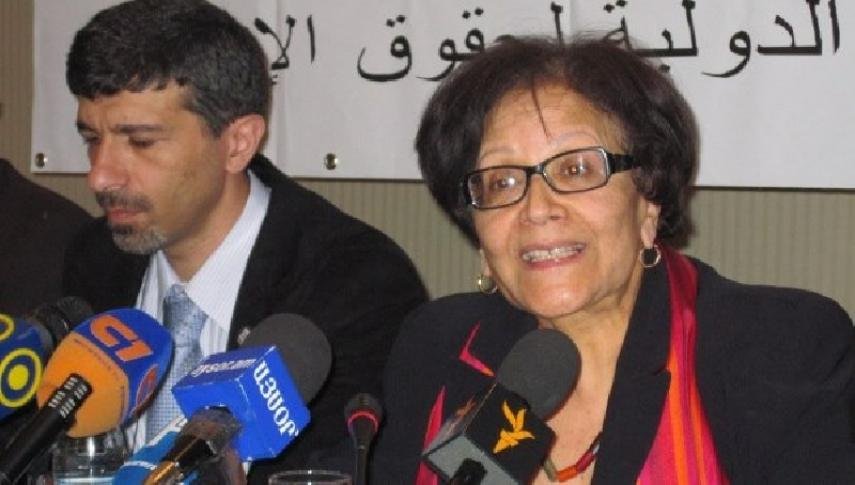
On April 9, in the end of the 37th Congress of the International Federation for Human Rights (FIDH), member organizations from the Armenian and Turkish leagues came up with a joint press conference. The topic was Armenian-Turkish relations from the viewpoint of human rights and civil society of both countries.
Before the press-conference the Armenian and Turkish leagues of FIDH adopted a statement about Armenian -Turkish relations.
"The statement is a result of our joint work. It became possible due to cooperation with our partners the Caucasus Media Institute, Helsinki Citizens' Assembly, head of the European Integration Karen Bekaryan, Institute of Civil Society and Regional Development and our Turkish partners: Helsinki Citizens' Assembly of Turkey," mentioned Artak Kirakosyan, Board Chairman of the Civil Society Institute.
"It seems that we should present different sides and attitudes, but it is not so, we adopted the statement not as opponents but defenders of human rights, as supporters of brotherhood and peace," announced Turkish human rights defender Yusuf Alatas.
"We wanted to come to Armenia because Armenian-Turkish relations are again at risk. We want to open the doors which are closed by the official parties. We want to sit with our Armenian colleagues, embrace each other and think about human rights defense in our countries," stressed another Turkish human rights defender Yavuz Onen.
He said to the presents that Turkish human rights defenders, who are today in Yerevan, including himself, for 25 years have struggled for human rights.
"Currently, when the nationalistic movement takes roots in Turkey, the struggle of democrats, liberals and human rights defenders turns to be more difficult."
On the question regarding the phrase "Armenian Genocide" used in the statement, Yavuz Onen answered:
"We do not have a special document on this question in our organization. It is a very delicate topic, and it can danger the current relations. It requires new psychology. We need to face our history and for this we need new psychological approach. We want to have a new bridge for brotherhood."
Artak Kirakosyan, Board Chairman of the Civil Society Institute noted in this regard:
"Those things that we can applaud at and think of as heroic in the statement of the Turkish human right defenders, can turn dramatic for them in Turkey. More important is that after death of Hrant Dink, thousand citizens of Turkey went to street with posters "we are Armenian, we are Dink". Another important step was the signature collection of the Turk intelligentsia, in which the word sorry was used."
The Turkish human rights defenders said that Hrant Dink was their friend: "When Hrant Dink was killed in Turkey, democracy and human rights were killed with that."
FIDH President Souhayr Bellhassen also answered questions of Armenian journalists, mentioning that she raised the necessity of the release of political prisoners and investigation of cases of the 10 deaths on March 1 at all meetings with high ranked officials of Armenia.
According to her, the Armenian authority do not reject that there are human rights issues in Armenia. In her opinion, there is also a will to solve these issues.
FIDH President mentioned that she met all the sides, listen to everybody to keep the balance. In this relation, the Armenian partner of FIDH- Civil Society Institute- assisted her.
"We do support neither the government nor the opposition, we are on the third side- the civil society, and our purpose is to strengthen and develop this lawyer worldwide."