
NON-GOVERNMENTAL ORGANIZATION


In the Eve of the International Congress
On April 6-8, the 37th Congress of the International Federation for Human Rights (FIDH) titled "Justice, the New Challenges" will take place in Yerevan. It is worthy to note that Armenia was selected as the place for the Congress for the first time. FIDH is one of the first organizations which started to work on human rights. It was founded in 1922, and currently it has 150 member organizations from 105 countries. In 2007, Civil Society Institute non-governmental organization from Armenia also became a member of FIDH.
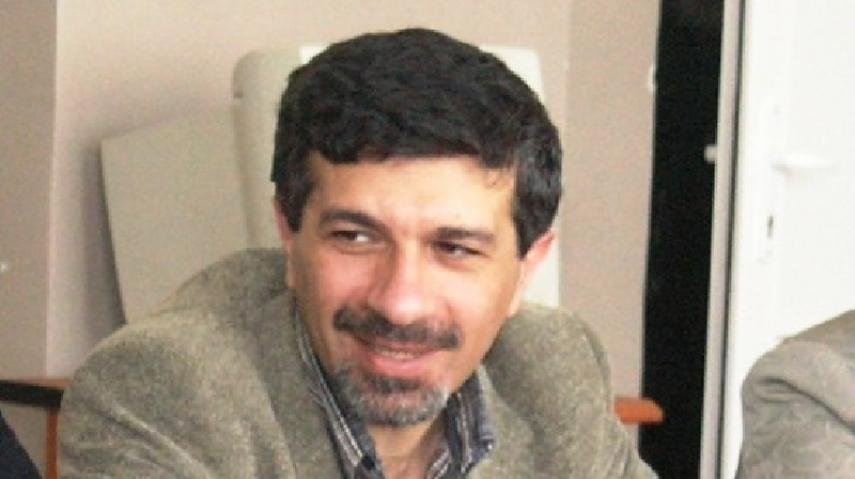
We talked with the Civil Society Institute's Board Chairman Artak Kirakosyan. According to him, the initiative of organizing this big international congress belongs to the FIDH President Souhayr Belhassen. "Although the Armenian membership in the FIDH is very short, the suggestion to organize the Congress in Armenia was accepted unanimously. It was also welcomed by the Turkish representative, notwithstanding his wish to bring the Congress to Turkey. The FIDH wanted to select one of the Eastern Europe or former USSR countries, where there are sharp and obvious changes in different layers of social life."
The Chairman of the Board of CSI emphasized the fact that such big events are impossible to organize without state support. "In addition, this was an issue made by FIDH which is convinced that without state support the work of the Congress cannot be provided", said Artak Kirakosyan. He mentioned that towards the Congress the FIDH delegations visited Armenia for two times, to learn about organizational works for the Congress.
According to A. Kirakosyan, the fact of organization of the Congress was welcomed by the Ministry of Foreign Affairs of Armenia. The President of Armenia accepted the invitation of FIDH to take part in the opening ceremony of the Congress. On April 6, Serzh Sargsyan will deliver an opening speech at the National Academic Theater of Opera and Ballet. RA Ombudsman Armen Haroutyunyan, Minister of Justice Gevorg Danielyan, the Chairman of the Court of Cassation Davit Avetisyan will deliver speeches. The president of Civil Society Institute Arman Danielyan will have a report on the situation with human rights in Armenia.
Participants of the Congress are influential figures including Chairman of the International Association of Francophonia, Prosecutor of the International Criminal Court, Judges of the European Human Rights Court, the Nobel Prize winner Sheri Edabi and well known human rights defenders. Also, more than 40 local human rights organizations will participate in the Congress. All member organizations from the South Caucasus will be present in the Congress, also big delegations are expected from Russia and Turkey.
Prior to Congress Armenian-Turkish meetings will be organized to assess the spectrum of human rights in regards to Armenian-Turkish relations.
How Armenia will be affected by the Congress? According to Artak Kirakosyan, the fact that during the Congress days more than 250 representatives from 105 countries will be present in Yerevan- and these are people playing serious role in their societies in the area of human rights - should foster that we also take a fresh and new look at the reality.
"It is true that the Congress is not directed at issues of Armenia, nevertheless it can bring a new energy to local human rights organizations and foster the dialogue between the government and human rights defenders. It is also interesting in regards to its international experience. I am confident that it will help to bring our issues to a different level and enable us to look differently at the issues and find new mechanisms for their solution. Armenia has a lot to do in the area of human rights, there are many issues here. We together with a number of human rights NGOs will come up with a statement on human rights issues in Armenia."
Another important point, according to Artak Kirakosyan is that human rights and governmental organizations will sit around one table. In the tactical sense, the government and human rights notion are on the opposite poles, as well as the lawyer and state prosecutor. However, in the strategical terms, without mutual cooperation it is not possible to reach the desirable result, it is the same as reaching the justice without the work of the lawyer."