
NON-GOVERNMENTAL ORGANIZATION


They demand to call the draft law back
Counterpart International Armenia non-governmental organization in coordination with 250 NGOs signed a document, in which they protest the draft amendments to the ROA Law on Non-Governmental Organizations. They demand that the Ministry of Justice call back the draft law from the National Assembly.
The draft was sent to the National Assembly on October 1, 2009, but its discussion was postponed for 90 days. NGOs stress that the draft amendments were not consulted with them and that the draft was sent to the NA without public discussion.
"Especially during last couple of years, when we became more active in expressing our views on public issues, they try to control us. It is not the question of adopting or rejecting the draft amendments, we demand that the authorities stop additional pressure on NGOs", says Inga Zarafyan, Director of the Ecolur NGO.
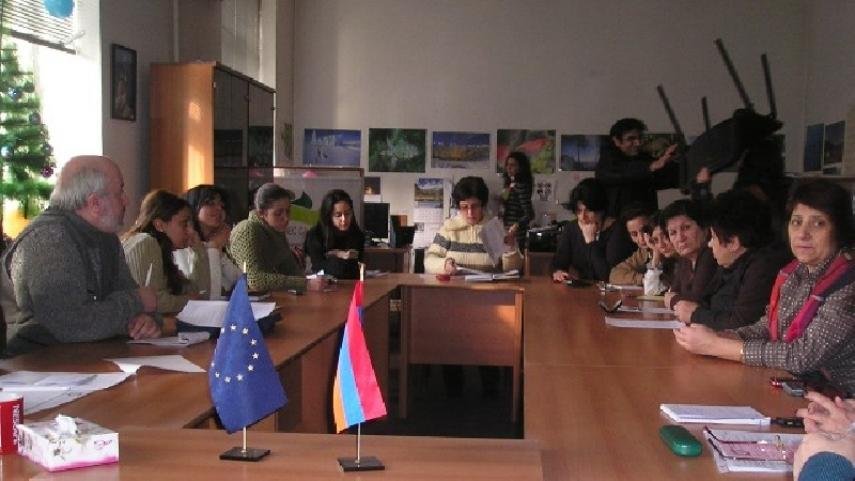
On January 26, 2010, a number of NGOs discussed the draft law in the Regional Environmental Center, and expressed their objections regarding preparation of the draft without consultation with NGOs and without proper organization of public hearings, about which not all NGOs were informed.
According to the new draft, on the 1st of April each year NGOs are required to publish a report on their activities, use of assets, financial transmissions in the press with circulation of 20000 issues, within 10 days of its publication, they need to send the report to an authorized governmental body.
In case, if a report contains mistakes or evidently false information, the authorized governmental body can call an extraordinary meeting, and if the invited NGO does not attend the meeting, the governmental body can call the NGO to court. NGOs should provide copies of the report to any physical and legal body within 10 days, and if rejected, these bodies can apply to court.
Tatevik Gharibyan, lawyer, states that the drafters of the law, the Ministry of Justice in this case, had to organize public hearings and inform all NGOs about hearings. As she mentions, the current law also demands that NGOs provide information to everyone requiring it. The lawyer says, that "only the drafters of the law, the Ministry of Justice can call the draft law back, and NGOs, which consider the inappropriate public hearings to be violation of the procedure, can only appeal to the Ministry to call the draft law back".
This draft law also covers creative unions, such as unions of painters, writers, journalists etc. Astghik Gevorgyan, President of the Union of Journalists says that she participated in the public hearings on the draft law. At one of the hearings, several changes related to the difference of creative unions and NGOs were suggested, taken into consideration and included in the draft.
"We had proposed the Ministry of Justice to develop a draft law on creative unions, but the Ministry rejected our proposal, and then suggested to include the unions in the draft law on NGOs. I disagree with other NGOs on the matter of public hearings. Why it happened so that we learnt about the hearings, and the others did not? It would be better if these NGOs instead of going to the American Embassy would be at the National Assembly's hearings", says Astghik Gevorgyan.
According to A. Gevorgyan, activities of the creative unions are regulated by normative acts, while NGOs are governed by the special law. As she says, the draft law, based on their suggestion, was changed to require regular congress of organizations once in every four years instead of every two years, because creative unions do not have enough financial and material resources to be able to complete their programs in two years and to bring their members from marzes to Yerevan every two years.
Knarik Hovhannisyan, Director of the Union of Armenian Seismologists NGO says that "at the hearings the representative of the Ministry of Justice approached heads of NGOs with an obvious contempt, it looked as we were the accused and he was the prosecutor."
Head of the Burg youth NGO Arman Vermishyan, who has signed the letter and disagrees with the draft law, nevertheless, mentioned that it would be appropriate if NGOs present their annual reports at a regular basis. "There are NGOs, which impede activities of honest NGOs. Some officials have their own NGOs, which take grants for millions, and because of them other NGOs also lose their reputation, being labeled as grant-eaters etc", says Vermishyan.
Nouneh Darbinyan, head of Ecolog NGO added that the current law does not help but also does not interfere, and it would be good for the government to procure services of the non-governmental sector, as it is practiced abroad.
At present, 3200 NGOs operate in the RA.
Christine Vardanyan