
NON-GOVERNMENTAL ORGANIZATION


Minister Reconfirms His Statement
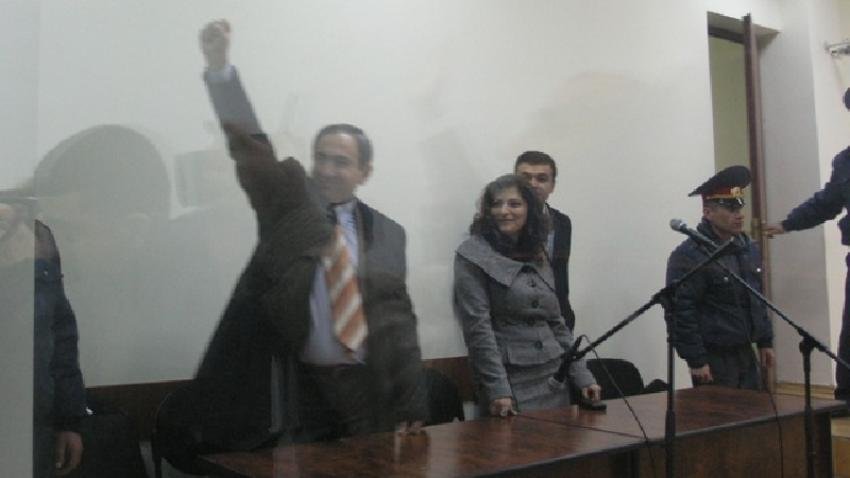
Ombudsman Armen Harutyunyan expressed an opinion that editor-in-chief of Haykakan Zhamanak daily Nikol Pashinyan's sentence term, convicted to 7 years of imprisonment, has to be halved (for the period not carried yet). He noted that the amnesty declared on June 19, 2009 by the National Assembly can be applied to the opposition politician.
In an interview with Radio Liberty the ombudsman grounded his opinion as follows: "It does apply since first of all it is connected with March 1, which was a precondition for amnesty."
As to whether the verdict of the first instance court is legal or not, and that the first instance court had to take into account the amnesty act while defining the sentence term, the ombudsman said that he did not want to comment it.
"The case has to be viewed in favor of human rights, and if we view it in a citizen's favor, amnesty is unambiguously applied, in this case to Nikol Pashinyan. Let us hope that the Court of Appeal will display such an approach, as laws need a liberal, broad interpretation," the ombudsman emphasized.
Meanwhile Minister of Justice Gevorg Danielyan has today expressed his opinion in the press: "As of now I can state with certainty that the data in Nikol Pashinyan's personal case do not interfere with application of amnesty."
It should be reminded that on February 10 the Minister of Justice had spoken about the possibility of applying amnesty to Nikol Pashinyan while meeting with the Chairman of the International Federation for Human Rights (FIDH): "Amnesty to Nikol Pashinyan may be applied and new developments are possible," Mrs. Belhassen cited minister.
Later the minister's words became topic of different discussions, and the minister officially announced that his words were wrongly reflected in the press.
It is unclear why the Minister of Justice first denies then confirms his own words. This is one of the rare cases when the press had appreciated and taken seriously what Gevorg Danielyan announced (and which later turned out to be а statutory requirement).
Source Url: