
NON-GOVERNMENTAL ORGANIZATION


Human rights in closed institutions: the Monitoring Groups sum up the year
The places for holding the arrested in police
Suren Iskandaryan, the head of Public Monitoring Group of in places for holding the arrestedunder the RA Police established in 2005, summing up the year 2011 old that have had achievements but there are still problems and things to do.
“Today there are not so many legislative gaps and contradictions but laws which are not implemented. In 2011 our work has been directed to the implementation of laws. After that we’ll speak about the contradictions and gaps” said the head of the Monitoring Group to www.hra.am. According to him the greatest number of violations is made by investigators.

According to Iskandaryan one of the recorded positive improvements is that some provisions of the Legislation which were not previously used started to be used by efforts of the Monitoring Group. The human rights defender says that previously the policemen carried out the arrest and detention on their own without the procedures prescribed by law which was inherited from the Soviet times
According to Iskandaryan the law has started to be implementednow. “A person is not kept in places for holding the arrested people and if they are transferred into a penitentiary there must be a decision of detention made by the court.”
There is a big progress to get the consent to post information about the rights and responsibilities in the corridors of the police and in all cells. The posters were published by the Monitoring Group and include information about the rights of the arrested people and free hot line. According to the head of the Monitoring Group the number of people who call the hot line has increased after sticking the posters.
Iskandaryan considers as another serious achievement the application of sanctions towards the offending policemen as a result of their ad hoc reports. In the previous years the facts of offenses were summed up in the annual report of the group but the police couldn’t process them because of expiration of limitation periods (3 months)of investigation.
“In 2010 we had 60 ad hoc reports as a result of which the head of the regional service, two chiefs of police departments, 18 chiefs of places for keeping the arrested and other employees of police received a severe reprimand.” We have even a case of firing. About 37-38 policemen received severe punishments. We didn’t have such an image at all” he says. The most concerned problem is the absence of access to the police departments. The Committee of Torture Prevention has reported it and suggested that the Monitoring Group should be provided ree access to any police department and room.
“We also suggested them allow us to record who is torturing and who is being tortured, the rest is left to law enforcement bodies. They resist. They say it may obstruct the investigation, the observer may handle information. But if the observer allows such a thing a responsibility is stipulated by law” mentions Suren Iskandaryan adding that these are false reasons, the police is not ready to work transparently.
According to the human rights defender in the places for keeping the arrested there are no cases of torture, the investigative actions and tortures are carried out in the rooms of investigators. “Now we want to achieve that the person is taken out from the places for keeping the arrested persons in rare occasions and the investigative actions are carried out in the places for keeping the arrested because the investigators behave differently in the places for holding the arrested” added the head of the Monitoring Group.
Another concerning problem is the medical treatment. “Except Yerevan we do not have doctors in places for keeping the arrested. One of the doctors of Yerevan recorded in the registration journal “there is a bruise on the back foot”. Well, imagine what the situation is” says Iskandaryan.
The first medical aid is left on the ambulance service whose doctors in Iskandaryan’s opinion perceive the arrested as criminals.
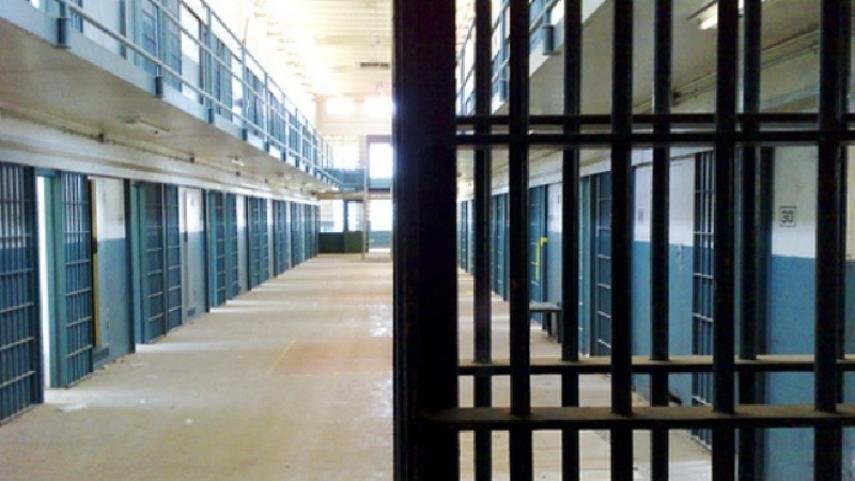
Penitentiaries
Arthur Sakunts the head of Prison Monitoring Group established in 2004 which carries out public control of the penitentiary institutions under the RA Ministry of Justice didn’t record any positive change in penitentiaries in 2011. In 2004 in the penitentiary institutions On the contrary, in his opinion the trends have been and are negative.

According to Sakunts one of the common problems is that non-legal mechanisms or “non-written laws” are more influential in penitentiaries than the acting legal norms. The laws are not enforced by one reason that the protection of prisoners in places for keeping the arrested is not ensured if they raise a question” says the head of the Monitoring Group. In his opinion that is the reason that the prisoners prefer to keep silence about the bad treatment towards them.
Human rights defenders are concerned about the problem of the convicts who have diseases that may prevent the bearing of punishment and about the gaps of Conditional Early Release System which didn’t get systematic solution in 2011.
The quality of medical service in penitentiaries is a serious issue on which the Monitoring Group and the human rights organizations have raised alarm on different occasions.
According to their evaluation there is no dispensary control in penitentiaries though there is a decision made by the Government on that. According to Arthur Sakunts the resources of medical service are not sufficient to provide a proper medical aid. The situation is worse in case of convicts with mental health problems as there are no relevant doctors, the staff is not ready to work with such people.

According to Sakunts “Nubarashen” penitentiary is another story. The human rights’ defender has mentioned for a number of times that the extremely poor conditions of penitentiary degrades human dignity and are equal to inhuman treatment. In his opinion the best solution is to close that penitentiary as it is impossible to provide normal conditions there by renovation.
It is mentioned in the report of the Monitoring Group that “Nubarashen” penitentiary institution is the largest with its full staff in Armenia and corresponds to neither national nor international legal requirements. In 2009 this was the only penitentiary where the prisoners didn’t have separate places to sleep and had to sleep in shifts.
Arthur Sakunts thinks the head of penitentiary administration must be appointed not by the RA President but by the Minister of Justice otherwise the subordination of the administration to the Ministry is formal.
“Sometimes we receive 2 different answers to ad hoc reports one from the Ministry of Justice and the other from the penitentiary administration” says the head of the Monitoring Group.
The official response to the ad hoc reports the human rights’ defender considers non adequate. “They do not try to solve the problem but to justify the penal system by different grounds.”
The Monitoring Group which carries out social control in penitentiaries introduced a package of reforms of penal system to the Ministry of Justice at the beginning of the year. According to Arthur Sakunts the Ministry responded mentioning that the recommendations would be taken into account. The year is close to the end but it is not clear for the Monitoring Group whether the recommendations were taken into account and if yes then which one.
Mery Alexanyan
Source Url: