
NON-GOVERNMENTAL ORGANIZATION


Decriminalisation: positive and negative consequences
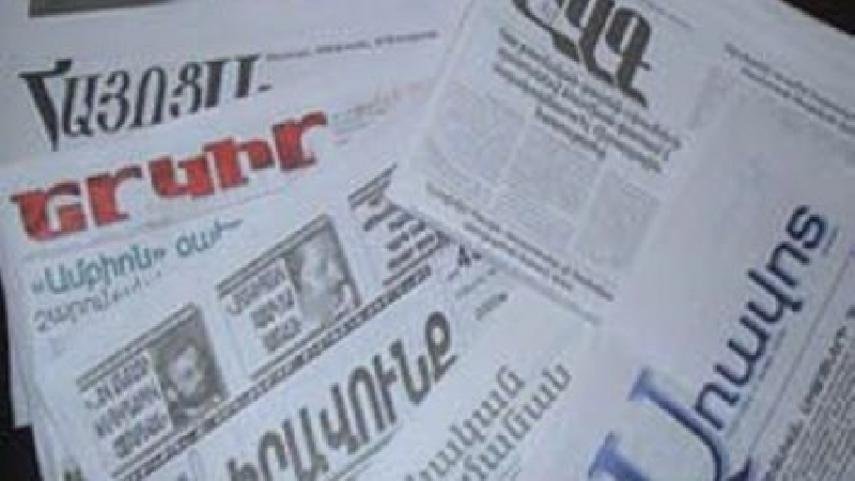
The court satisfied the request to eliminate the arrest of financial means of Hraparak daily, so the newspaper will continue its normal activities. The arrest on the financial means of the newspaper was imposed after Robert Kocharyan, the second President of Republic of Armenia, brought an action against the newspaper for charges of insult and slander demanding as a compensation a disclaimer and 6 million drams.
The arrest was imposed after the publication of the message of the RA ombudsman Karen Andreasyan addressing to the judges. "This shows how discredited the institution of the Ombudsman in our country is", responded Armine Ohanyan, Hraparak daily editor-in-chief, adding that the ombudsman should be envolved in the process of opposing the judicial campaign against mass media.
It has to be noted that K.Andreasyan participated in the process of developing the law and decriminalizing the articles on insult and slander, so some editors consider him responsible for the current situation.
On April 7, the Ombudsman's office responded to the announcements of Hraparak editor making some clarifications.
In particular, they stated that judges, while making every decision, have to compare the RA legislation with the precedental decisions of the European Court of Human Rights. It is impossible to include them all in the legislation; however, judges have to be informed and apply those principles.
"So the problem of the implementation of this law greatly depends on the ability of judges to carry out unbiased investigation, be aware of the interpretations following from the European Court practice and defining adequate compensation for the damage," the Ombudsman's office announcement reads.
Ashot Melikyan, Chairman of the Committee for Protection of Freedom of Speech believes that the ombudsman did what was within his competence; the problem is in the judicial system.
"I insist that decriminalization was a progressive step; however, Armenia is a country where even a progressive step might lead to unpredictable consequences," Melikyan says pointing at two basic reasons - lack of independence of the judicial system and intolerance of the society (including the political elite) to criticism.
In his opinion, the law has two basic shortcomings - disproportionately big fines and indistinct definitions of insult and slander that can allow subjective interpretations. According to Melikyan, by demanding large financial compensation politicians simply want to punish those who criticize them.
In the first quarter of 2011 the Committee for Protection of Freedom of Speech (CPFS) reported 10 cases instituted against media outlets for insult and slander; there were another three such cases in 2010, after decriminalization of the articles.
Though there was an unprecedently high number of suits against mass media, which arises concerns of the respresentative of mass media, Ashot Melikyan believes it also has its positive side - "conflicts are not solved by fists."
Heritage party and Armenian National Congress made announcements condemning the campaign against mass media.
According to the report published by CPFP, in the first quarter of 2011 no cases of physical violence were reported against reporters; there were 15 cases of pressure of other nature including 10 suits. There were four cases of violation of the right to receive and spread information.
Mary Alexanyan
Source: www.hra.am