
NON-GOVERNMENTAL ORGANIZATION


Detect Murders in the Army
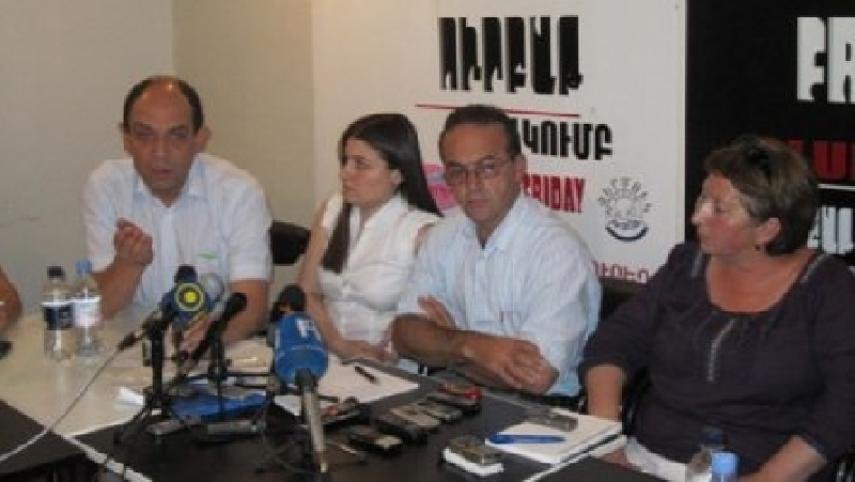
According to data from human rights non-governmental organizations, during the last 17 years about 1500 young men have died in the Armenian army in time of peace (187 in the last 4 years).
Levon Barseghyan, head of "Asparez" Journalists' Club NGO, says this figure may actually be as high as 2500 since state structures give no clear answers to them and they get information on murders from NGOs where the figure 1200-2500 is circulated.
"In 2006 we asked for four official data on murders committed in 2005 and received four mutually exclusive figures. An answer was posted in the site of the Ministry of Foreign Affairs that the murder cases have declined and in 2005 were equal to 12; the figure reported by the Ministry of Defense was 34. After that we wrote letters to the Ministry of Defense and Military Prosecutor's Office: they came up with two different figures - 29 and 89," Avetik Ishkhanyan, Chairman of the Helsinki Committee of Armenia, says.
Human right activists consider it wrong to refuse information to non-governmental organizations on the pretext of state secret when such information is provided to international organizations (even though such information is referred to skeptically).
Human right activists claimed that the Military Prosecutor's Office has not developed a special system that can detect murders in army and it is not right that the military prosecutor goes to the scene of crime just to show that they are doing their job.
Journalist Zhanna Alexanyan emphasized that recently murders in army are attempting to present as suicides, which relieves the state of responsibility and deprives families of deceased soldiers of the right to get compensation.
There is another serious problem - providing families of deceased soldiers with attorneys. The Military Prosecutor's Office deals with this issue, and parents have doubts about their impartiality taking into consideration numerous non-detected cases in previous years.
"Right now the family of Aghasi Abrahamyam, killed on August 26, has no means for the attorney and the father is greatly concerned about it. When I asked the head of the Legal Department of MoD why they don't give compensation, he answered that there is no compensation in case of suicide; someone has committed suicide so there is no violence in the military unit, the young man did that because of a beloved girl or due to his ill imagination," Alexanyan says.
Levon Barseghyan, head of "Apsarez" Journalists' Club NGO has another fear: he remembers that when the Soviet troops invaded Afghanistan, officers of Soviet special services noticed that servicemen with relatively long terms of service were often found in the battlefield shot in the back.
"It turned out that they had oppressed the new conscripts so much that the latter took revenge in the battlefield. Nobody can say how these young men, with weapon in their hands, would behave in the battlefield," Barseghyan says.
Artur Sakunts, President of the "Helsinki Citizens' Assembly Vanadzor Office" NGO, says that they do not have concrete information but often not healthy young men are conscripted due to inappropriate medical examination.
"For instance, right now we deal with the case of a young man - Rafik Hovanisyan, serving in Vaik, whose one leg is 1.5 cm shorter than the other, he is squint-eyed and infantile," Sakunts says.
Human right activists are concerned also with a case reported today by the youth initiative "We Will Not Keep Silent": soldier Hovanes Vardanyan who has been serving in Askeran already for 14 months appeared in a psychiatric hospital; his father learned about it only after 9 days and not from MoD structures.
Human right activists made an announcement demanding detection of murders in army and concrete actions to improve the situation in army.
Karine Ionesyan
Source - hra.am