
NON-GOVERNMENTAL ORGANIZATION


Training on “Freedom of Speech: Rights and Restrictions: European Experience”
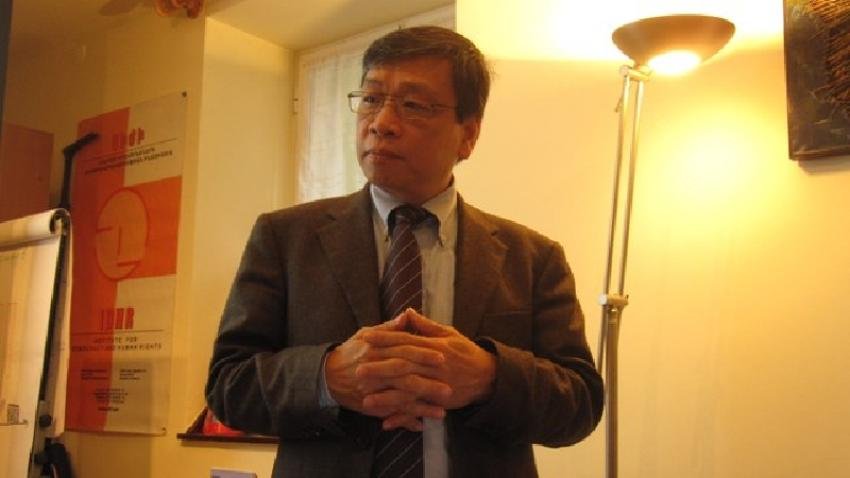
On the 19th of December the Secretary General of “International Society for Human Rights” organization Professor Vu Quoc Dung held training on freedom of speech, rights and restrictions in this field and the European experience.
Professor Vu Quoc Dung first inquired about the general situation of freedom of speech in Armenia, who rules in the media world here, whether there are legislative restrictions in the sphere of freedom of speech, are there imprisoned journalists, etc. Afterwards, the speaker made the detailed presentation of the article 19 of the Universal Declaration of Human Rights and its three aspects: the right to seek, receive and impart information and ideas.
“Even if the government of some country sponsors some sphere of media, following the above mentioned article and its aspects, it should not restrict the activities of that media and should allow it to provide the public with true and comprehensive information”, said the Professor Vu Quoc Dung.
“However, we should not forget that there are other aspects in the article 19, according to which we should respect others’ dignity and rights and also respect the national security, public order, public health and moral”, mentioned the professor adding, that this restriction can be applied, if the restriction is in accordance with the law and aims at protecting some legitimate aim.
“However, no restriction should be grounded by religion, tradition or other customs, otherwise, new restrictions will be added to the current ones making the system very complicated”, mentioned Mr. Dung.
To our observation that there is increase in judicial cases against Armenian media this year and the politicians call some materials published in the media as libel, Mr. Dung answered: “If politicians are being defamed, they should be more tolerant and should not restrict the activities of the journalist, since if the journalist has only one source for expressing opinion, the political figures have many more sources for expressing their dissatisfaction. The politician should have thick skin in order not to get offended from the opinions expressed in the media”.
To the questions of www.hra.am how to behave when the libel is directed not to the political figure and it takes place in the websites, he answered, “We call it discrediting reputation. Many times our organization has been the victim of such cases. During the Cold War the National Security Service quite often ordered the media to write negative things about our organization. We applied to courts, and some courts said that since there are no proofs of the things the media write about our organization, therefore they should be banned to write such things. Other courts said that these are just opinions. Therefore, it is essential that the expressed thoughts sound as simply opinions.”
When we specified our question presenting the case of “Lawyer Arthur Grigoryan against “Hraparak” newspaper”, the professor said, “It’s funny. Why should the newspaper be responsible for the comments of the citizens, especially when it is an online newspaper and especially when we take into account the wide usage of the internet today?”
The participants of the training asked, whether or not after the newspaper is being warned about the defaming comment and doesn’t remove the comment from the website in 24 hours, leads to the thought that the newspaper agrees with that opinion, the Professor answered, that as long as the newspaper doesn’t write a comment that it agrees with that opinion or writes a defaming comment, then the newspaper should not answer for the reader’s comments.
“Imagine a dictator, who goes to Germany and meets there people protesting against him, and he demands to imprison all of them. This is a dictatorship mentality, when they think they can do everything in their own countries, however in Germany neither protests nor freedom of speech can be banned. Fortunately, you are also moving forward, and you managed to transfer the law on defamation from criminal to civil code, simply you should continue demanding definition of precise borders between freedom of speech and defamation”, thinks Professor Vu Quoc Dung.
The training on “Freedom of Speech: Rights and Restrictions: European Experience” was organized by the organization “International Society for Human Rights: Armenia”.
P.S. Professor Vu Qouc Dung is the Secretary General of “International Society for Human Rights” organization. The organization was founded in 1982 as the “Australian Human Rights Society”, when the Indo-Chinese refugee crisis was still a major human rights issue in the region. The three primary objectives of the organization are: human rights advocacy, refugee relief and grass roots developmental assistance.
Sofia Manukyan
Source: www.hra.am
Source Url: