
NON-GOVERNMENTAL ORGANIZATION


Integrating Human Rights in the Anti-corruption Agenda
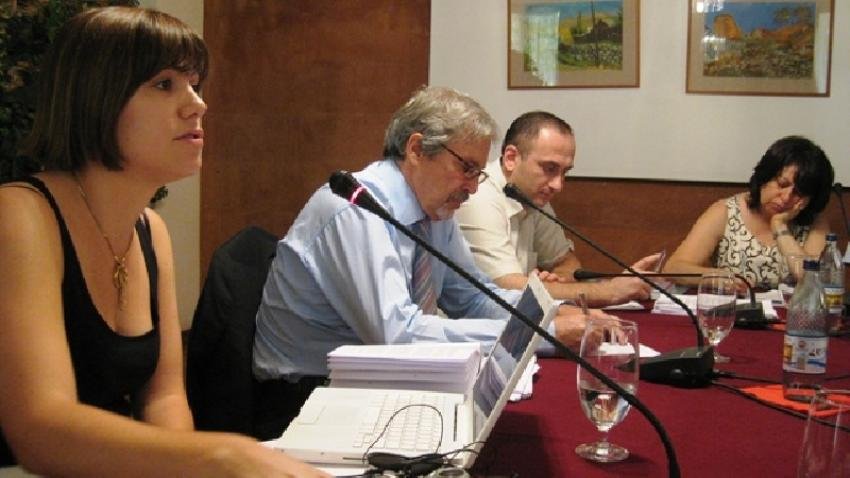
Participation, transparency and accountability: these are the key principles, aimed at making the fight against corruption more effective. These key points, as well as their role in making the fight against corruption more productive, are included in the report called "Integrating Human Rights in the Anti-corruption Agenda: Challenges, Possibilities and Opportunities" published by the International Council on Human Rights Policy (ICHRP). Its Armenian version published by ICHRP in cooperation with USAID Mobilizing Action Against Corruption, was presented on July 26, 2011, during which Kate Donald, Research Associate at ICHRP, presented the report and its key aspects.
As mentioned during the presentation, three aspects are vital for making the fight against corruption more productive. Discussing each of the aspects, clear connection was observed with human rights, therefore not following any of these aspects means violating the rights of the person. Since these three aspects are also important for ensuring eradication of corruption, therefore the report links corruption with the human rights, by stressing the presence of the first as the violation of the second.
In detailed presentation of the report, one of the points Ms. Donald mentioned was that participation includes public involvement in processes of fight against corruption through standing up for their rights. Therefore making the voice of the society heard whenever these rights are violated, including by violating them through corruption, is vital for fight against corruption.
Also stressing the interconnection of transparency and accountability, she pointed out the importance of human rights organizations' role in coordinating group actions as well as grassroots in mobilizing actions for holding governmental bodies more accountable to them, as well as to each other.
For this purpose it is of primary importance to first of all make the information accessible to everyone, including vulnerable groups of the society.
However, issues concerning fight against corruption and its linkage to human rights also give source for debates and disagreement, the moment there is need to prove the occurrence of corruption, which is quite difficult. This process, when permeating with the need to defend the rights of the person charged for the corruption, can be quite problematic, as long as there is need to follow the presumption of innocence. Therefore activities such as imitating the scene of corruption with the purpose to establish the fact of guilt might not be taken as proof as long as the presumption of innocence of that person is violated.
Therefore there is vital need to find the balance between fight against corruption and using human rights as a tool.
About the organization:
ICHRP has a unique research capacity in exploring the issues of human rights and corruption and linkages between the two concepts. ICHRP has prepared and published two reports on this issue. In the first report "Corruption and Human Rights: Making the Connection" (also in Armenian) ICHRP developed a conceptual framework that enables users to link particular acts of corruption to specific violations of rights.
The second report - "Integrating Human Rights in the Anti-Corruption Agenda: Challenges, Possibilities and Opportunities" - was published by ICHRP in 2010. The report in Armenian, with a foreword by the Human Rights Defender of the Republic of Armenia, Mr. Karen Andreasyan, looks at where and how the use of a human rights framework might strengthen national and local anti-corruption programs and at how key human rights principles can be operationalized in anti-corruption work.
Ms. Kate Donald, ICHRP Research Associate, is currently directing the projects on corruption at ICHRP, as well as working on projects related to poverty and business. She has a BA in History from Oxford University and an MSc in Human Rights from the London School of Economics. Her previous experience includes work as an investigator specialising in litigation support for international fraud and corruption cases, and at a London-based social enterprise set up to encourage and enable increased transparency and accountability from business. She also completed internships at the ICHRP, the BBC and a UK political think-tank where she worked on the issue of social mobility.
Sofia Manukyan
Source: www.hra.am
Source Url: