
NON-GOVERNMENTAL ORGANIZATION


Import getting more expensive: Armenian businessmen dismayed at higher “customs clearance” costs
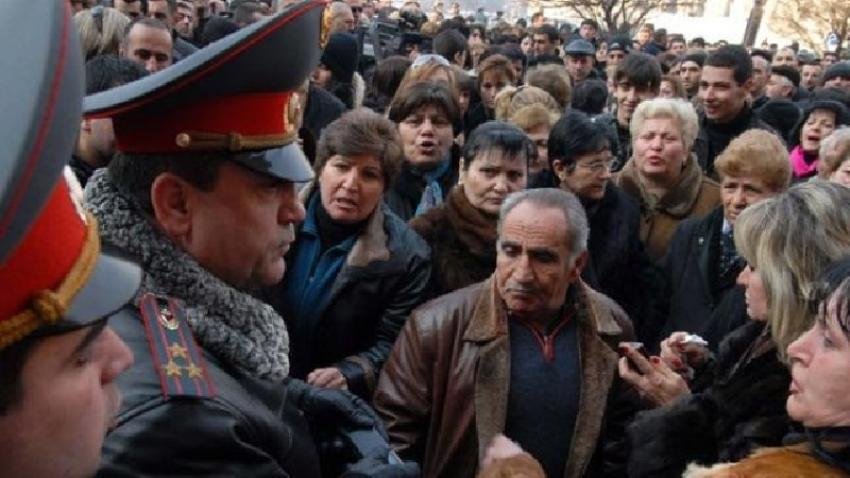
Armenian traders importing nonfood items from Turkey and China have been staging protests near the government house for several days, demanding that what they believed was a hike in customs clearance charges be dealt with. The first demonstration took place by Armenian traders in Istanbul a week ago when customs fees had suddenly been doubled - from $4 to $8 per kilo for imports from Turkey and from $7 to $14 per kilo for imports from China. No amendments, however, had been made in the Armenian law on dues and officially no customs dues have been raised.
(The Armenians protested in Istanbul as they were about to return with their goods, when they learned of the price increase. Most of the shipping companies used there are Armenian owned and separate customs clearance occur in Georgia and in Armenia. By using a shipping company, traders can have the process completed in one transaction.)
"The government insists that it has nothing to do with it and suggests clearing the matter with the shipping companies, which in turn say they were told from 'above' [to raise the charges]," said one protester.
A government representative who had come out to talk to the demonstrators said that the rising costs solely reflected the behavior of individual entities involved in the shipping business. Prime Minister Tigran Sargsyan instructed the Minister of Transport and Communications Manuk Vardanyan to send requests to relevant authorities of Georgia (through which transport is made) and clarify the situation as early as possible.
Problems of Armenian merchants importing goods from Turkey are mainly associated with the "shadow" mode of action of the customs service of Armenia, writes a News.am economic analyst. Such customs clearance procedures contradict the legislation of Armenia. By law, during customs clearance people should pay value-added tax (VAT) and customs duty on the basis of the cost of goods rather than its physical weight.
Customs clearance is carried out through customs brokers, to whom "shuttle" traders pay in cash, bypassing the law. They say that if the payment were not under the table, the fee would be 32 percent (of the product value).
According to Gevorg Saroyan, who the demonstrators appointed as their representative, the government promised to "rein in" the shipping companies, up to canceling their licenses.
Problems in the customs system of Armenia are one of the main obstacles to the development of exports and lower prices. Because of the high customs duties and shadow payments, the prices of imported goods rise constantly. In 2010, Armenian exports totaled about $1 billion and imports to Armenia about $3.7 billion, which is the worst rate among former Soviet countries.
Improving the efficiency and transparency of customs services management is one of the most important tasks of the anti-corruption strategy for 2009-2012, which is the focus of the OSCE Yerevan office's attention, said the office's head Sergey Kapinos at a joint news conference of the office and the Customs Brokers Association. He expressed hope that a powerful and efficient customs system, which will provide professional services to the population of the country, will be created in Armenia.
Source: www.armenianow.com
Source Url: