
NON-GOVERNMENTAL ORGANIZATION


Time to Open the Doors of That Rotten System
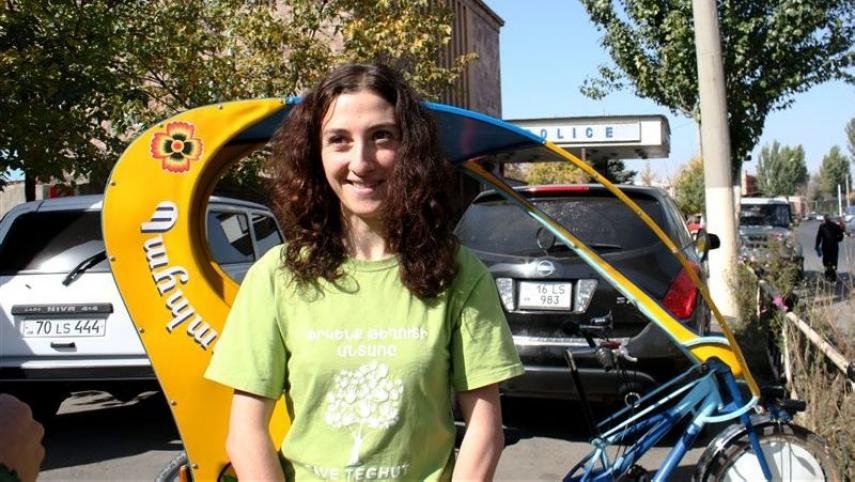
The charge put forward to Mariam Soukhoudian was altered for a couple of times during the last months. At first she was accused according to the 1st point of 135th article of the RA's criminal code for libel, and then it was changed for false crime reporting - article 333, part 2, point 3. On the 21st of October the charge was changed back to the previous one. In the point of view of the defender of Soukhoudian, Nona Galstyan, the renaming of the accusation didn't change the main point of the case. "This can be considered a mitigation of only the criminal responsibility", said the defender during our talk.
The first part of the 135th article (libel) defines punishment in form of a fine, and the second part of the 333th article (false crime reporting) defines imprisonment for maximum 5 years.
The content of the accusation has not been changed, says Shoukhoudian's defender. "The charge is built upon the same approach that Mariam Soukhoudian persuaded the pupil of a boarding school to tell that information, and later during the investigation of the case it turned out, that this doesn't correspond to reality."
We should mention that Mariam is accused of false crime reporting against the authorities of Noubarashen's school N111. She had participated in one of the volunteering programs, organised by UN in that school, and together with other members of the group, raised an alarm about the situation in that school - bad food, deficient education, anti-sanitary conditions and infringements upon the pupils by teachers. The law enforcement bodies didn't arouse any proceedings regarding those facts; instead, an accusation for false crime reporting was brought towards Mariam Soukhoudian.
The criminal case proceeded according to reportage, shown by 1st Public TV-company, where two pupils of that school tell about sexual assaults of their teachers. Later one of them took her evidence back and a criminal case on false crime reporting was brought towards Mariam Soukhoudian.
If they call me to the court, I will lie
At the end of the last year the author of the reportages launched by the Public TV-company was Susan Simonyan who is a witness of the case. In her turn she notes that the reportage has been prepared by her initiative. She had firstly met one of the pupils of the school, talked to her, prepared the material and only after that forbade the girl to talk to any journalists. According to Susan, another girl came to her after that and voluntarily told a similar story. The story of the second girl was shown as separate reportage. "Both girls were interrogated: as far as we understood, one of them refused to give the evidence under the pressure of her parents, the second one persisted on her evidence to the last, even during a cross-examination with the teacher she said that such a thing had happened and didn't take her words back", said Susan Simonyan.
But the pre-investigational bodies didn't pay attention to these testimonies. This causes Nona Galstyan's bewilderment. "Why do the examinational bodies take only the first reportage for the basis of the criminal case and the accusation, why is the second one given no legal assessment?"
The testimonies of the young people, who participated in the same volunteering program as Mariam and are witnesses in this case, were not considered as well. Their solicitor, Tigran Hayrapetyan says that their evidence was either ignored or considered not credible. After getting acquainted with the material of the case the volunteers are to present a report on the criminal case to the chief prosecutor.
"The contradiction is so obvious that the members of the volunteering group, in order to help their friend, addressed the prosecutor's office with a report on the crime, to bring those, who wrapped the facts and affected the information given by the pupil, to criminal liability."
Not only the testimonies of the young people, working in the same group with Mariam were counted untrustworthy, but also the evidence of four ex-pupils of that school, who have also witnessed these kind of cases and asserted it during a cross-examination with the teacher. "The case is more than simple: there is one witness, who gave evidence against Mariam Soukhoudian, and there are numerous witnesses, who have witnessed for Mariam, but their testimonies haven't been counted as credible. But the volunteers gave the pre-investigational bodies a recording of a telephone call in the connection of that one D.A. witness.
The phone call of one of the volunteers, Arman Gharibyan, and the pupil was recorded and handed to the investigational bodies. During that talk D.A. says, that a lot of people recognised her from that TV-reportage and she was "disgraced in front of all her acquaintances", as she puts it. She also mentions that someone has come to their house and has had a talk with her mother, that's why she has to take her evidence back and can not tell the truth. It is distinctly heard in the recording (which was also given to journalists) how she says, "If they call me to the court, I will lie". In the report on this recording these words are left out. The recording was not only ignored as evidence, but also falsified during the decipherment, according to Soukhoudians defender Nona Galstian.
After getting acquainted with the material of the case the defenders were to submit new motions, but on the 14th of November it turned out that Mariam Soukhoudian's case, instead of going to the court, was sent back to the investigation body. Prosecutor Grigoryan, who is controlling the legality of the case, gave instructions of making some investigational work in order to throw light upon certain circumstances in connection to the case of Erebouni police investigator Vigen Mesropyan.
"The spreading of this information brought its results, as the investigator was about to send the case to the court, but the prosecutor sent it back: this means that in their system it is also accepted that the case is incomplete, and this doesn't happen very often," says Nona Galstyan.
I was given an impulse
I asked Mariam if she could have imagined that the case would take such a turn, when she just started talking openly about the conditions of the school N11. "Somehow I could expect that, even the accusation summons wouldn't have been a surprise. So I expected the kind of civil activity, I knew that they would use it someday. But even without that fuss, only this now would have been enough. It's because I went against the system, because I can see that the number of criminals rises, they stand by each other or falsify the evidences. The system is rather big, it's not that easy".
I also asked her if she would continue her fight if her case would have been terminated.
"If the only thing I needed was getting rid of the status of an accused, I would accept their offer and the case would have been over in the police station and I would be out of all this trouble. But after all this I have to go till the end. They even gave me an impulse of further actions; I should thank them for that."
In her belief the problem does not refer only to the Noubarashen's school. "We are sure that similar cases happen rather often in special schools, and it's time to open the doors of that rotten system."
Lousineh Vasilyan
P.S. During one of the last interviews chief police officer Alik Sargsyan, touching the topic of the young activist of an environmental protection movement Mariam Soukhoudian, mentioned, that the material of the case is founded and the protest campaigns in defence of Mariam are useless. This interview took place after the protest campaigns, which were undertaken by the representatives of civil organisations. Hounan Pokhosyan, the chief of the board, fighting against organised crime, lately announced, that "a thorough and serious investigation is made in order to reveal the circumstances of the case."