
NON-GOVERNMENTAL ORGANIZATION


European Court of Human Rights: 150,000 non-examined cases and thousands of non-executed decisions
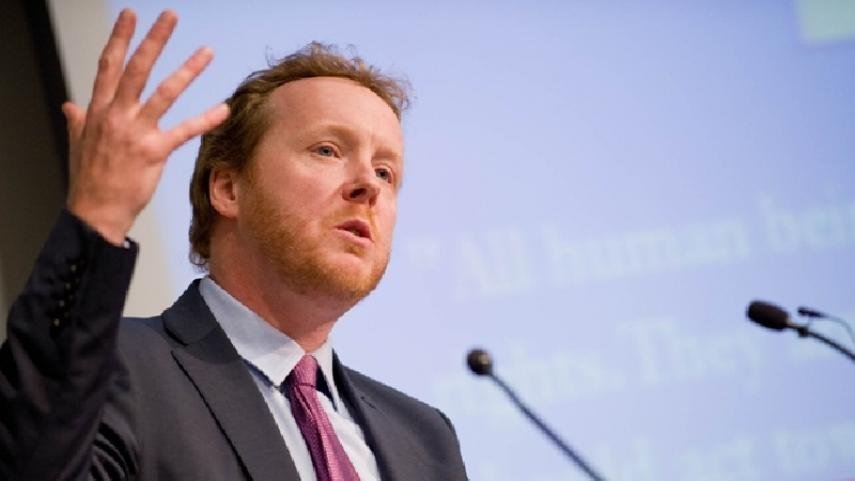
"We have to be more selective when sending cases to the European Court of Human Rights (ECHR). We have to select the cases that raise problems of strategic significance that can directly lead to changes in national legislation, policy and practice or even have an impact on the regional level," says Philip Leach, Director of European Human Rights Advocacy Centre.
He emphasizes the role of NGOs in the issue of representing interests of complainants but calls them not to send cases of the same nature all the time: "We are obliged to do this difficult selection otherwise if we send the same cases, they will be blocked there and get no solution," Leach says pointing at more than 150,000 suits presently waiting for examination at ECHR.
He claims it creates big pressure for the court, and there are endless debates on what reforms are needed. "NGOs too have to participate in the judicial reform discussions; otherwise it will grow into a private club of states: they will gather, decide what system to run to be able to quietly work in the shadow, which cannot be right," Philip Leach is convinced.
In his opinion, there is need to replace some of the ECHR judges: "There are judges that are good; but there are also judges who have been appointed for political reasons, and they don't have the required professional qualification."
The number of suits sent to ECHR is big because there is a problem of executing court decisions, the expert claims: "If the court recognizes by its decision the violation of human rights, the state has to implement reforms, and such cases should not be sent to the court any more. But the states do not execute the decisions (both in this region and in the West), so thousands of similar cases are again sent to ECHR by different plaintiffs."
Hence, Leach believes that NGOs have to be more consistent in demanding execution of decisions and think what can be done to provide more influence for ECHR decisions in the country.
He claims ECHR has changed its mode of action in the last 3-4 years: "If for years the court had been only recognizing violation of this or that article of the Convention and appealing to the states to eliminate the violation, now it makes strict demands. It states the occurrence of the violation, its reasons and what has to be done, also defining the time for making the changes," says the expert considering it an essential change in the ECHR mode of action.
Philip Leach also emphasizes the role of NGOs in explaining the decisions, translating and distributing them, since he claims that sometimes the states intentionally translate the decisions incorrectly.
Since 2002, when the European Convention of Human Rights was ratified, citizens of RA too had a right to send complaints to ECHR. More than 1025 complaints have been sent to ECHR since 2002, more than 250 have been rejected for different reasons. The court has made 28 decisions concerning the Republic of Armenia, in 27 of which the fact of the violation of human rights has been registered.
Arman Danielyan, head of the Civil Society Institute NGO, notes that after "exhausting" national courts and finding here no justice, many citizens of Armenia pin their hopes with ECHR. "In the conditions of the lack of confidence of the society in courts, decisions of the European Court are accepted positively in Armenia even if the compensation sum is symbolic because people believe that justice has eventually triumphed."
Ketevan Khutsishvili, executive director of the Open Society Foundations-Georgia, notes that Georgia is one of the countries with a large number of suits in ECHR. "There are 2800 cases waiting for their fate, 1900 cases have been rejected; there have been 41 decisions concerning Georgia and in 34 cases violations have been detected."
Khutsishvili claims that this statistics is not encouraging and demonstrates that the Georgian society does not trust national courts and prefers to apply to ECHR. "Courts are considered as structures with very low corruption but under very strong control, since they are supervised by the prosecutor's office and by the Ministry of Interior."
Georgia too has a problem with the execution of European Court decisions. Khutsishvili claims that they are executed very late, or incorrectly or are not executed at all.
P.S. The discussion took place within the framework of the "What's the Future for Democracy and Civil Society?" Conference.
Mary Alexanyan
Photo - www.londonmet.ac.uk
Source - www.hra.am