
NON-GOVERNMENTAL ORGANIZATION


ECHR issued judgment on Ashot Harutyunyan v. Armenia case
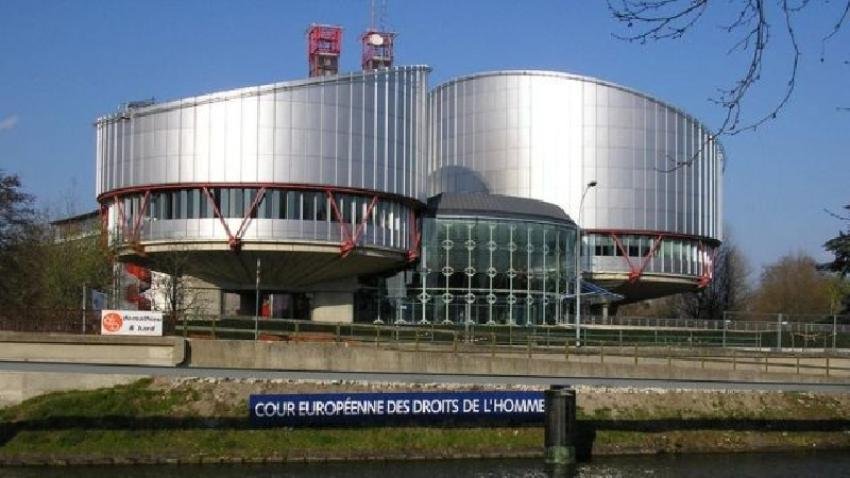
15.06.2010
Ashot Harutyunyan v. Armenia (application no. 34334/04)
Detainee with ulcer and heart condition kept in metal cage at his trial and denied adequate medical care
Two violations of Article 3 (prohibition of inhuman or degrading treatment)
No violation of Article 6 §§ 1 and 2(right to a fair trial)
of the European Convention on Human Rights
Principal facts
The applicant, Ashot Harutyunyan, now deceased, was an Armenian national who was born in 1952. He died of a heart attack in Kosh prison (Armenia) on 20 January 2009 while serving a sentence for fraud, falsification of documents and tax evasion.
Mr Harutyunyan suffered from a number of illnesses prior to his detention, including an acute bleeding duodenal ulcer, diabetes and a heart condition.
Arrested in May 2003 on suspicion of defrauding his business partner, Mr Harutyunyan - who had no previous convictions - was found guilty as charged by the District Court of Yerevan in January 2004 and sentenced to seven years' imprisonment.
He lodged an appeal in February 2004; the proceedings lasted from March to May 2004 and ended with his sentence being upheld. At each of the 12 hearings - lasting on average about four hours - before the Court of Appeal, he was kept in a metal cage. The applicant alleged that that had amounted to humiliation and violated his dignity, further aggravated by seeing the pain of his family and friends, present at the hearings. His conviction was ultimately upheld in July 2004 by the Court of Cassation.
Mr Harutyunyan was held in Nubarashen Detention Facility from the date of his arrest in May 2003 until being transferred to the Kosh prison in August 2004, just after his conviction at final-instance. Between those dates he spent periods in a hospital for prisoners and in the detention facility's medical unit.
The applicant alleged in particular that, despite a recommendation made in June 2003 by the medical unit's doctor for him to have surgery for his ulcer, no operation was ever carried out. He further claimed that between 29 August 2003 and 13 August 2004, he was not provided with regular check-ups, medication or a special diet. During that period he asked on numerous occasions for medical assistance, to no avail; and, his lawyer also lodged numerous unsuccessful complaints to the prison and domestic authorities requesting that his client be transferred to a hospital and receive treatment. In the meantime, on 27 July 2004, the applicant had a heart attack in the detention facility. The lawyer did subsequently receive replies to his complaints but they simply stated that his client had received treatment and his health was satisfactory.
The Government submitted that the applicant had been placed under adequate supervision and care while in detention; he had had access to a doctor at any time and was promptly examined and received treatment whenever requested or required. It added that the applicant had had surgery for his ulcer when hospitalised in June 2003 and that he had been discharged in a satisfactory condition.
Released in March 2007 in view of his good behaviour, he was subsequently, the decision allowing his release having been quashed, taken back into prison where he died in January 2009.
Complaints, procedure and composition of the Court
Relying on Article 3 (prohibition of inhuman or degrading treatment) and Article 6 §§ 1 and 2 (right to a fair trial and presumption of innocence) of the Convention, Mr Harutyunyan complained that he had not received adequate medical care in detention and that he had been placed in a metal cage when in court during the appeal proceedings.
The application was lodged with the European Court of Human Rights on 14 September 2004 and declared partly inadmissible on 7 December 2006.
Judgment was given by a Chamber of seven judges, composed as follows:
Josep Casadevall (Andorra), President,
Elisabet Fura (Sweden),
Corneliu Bîrsan (Romania),
Boštjan M. Zupančič (Slovenia),
Alvina Gyulumyan (Armenia),
Ineta Ziemele (Latvia),
Luis López Guerra (Spain), judges,
and also Santiago Quesada, Section Registrar.
Decision of the Court
Article 3
Lack of medical care in detention
The Court found that, given his number of serious illnesses (undisputed by the parties), the applicant had clearly been in need of regular care and supervision. However, there was no medical record to prove that surgery, as recommended by a doctor, had actually ever been carried out. Nor did the applicant's medical file contain a single record of any check-up by or assistance from the detention facility's medical staff between 29 August 2003 and 13 August 2004. Especially worrying was the fact that the applicant's heart attack in July 2004 coincided with the several unsuccessful attempts made by his lawyer to draw the authorities' attention to the need for his client to receive medical care. Indeed, the lack of response - or purely formal replies - to the lawyer's complaints as well as to the applicant's verbal requests for medical assistance had to have given rise to considerable anxiety and distress for the applicant, which had gone beyond the unavoidable level of suffering inherent in detention, in violation of Article 3.
Applicant having been seated in a metal cage during his appeal trial
The Court noted that nothing in the applicant's behaviour or personality could have justified such a security measure: he had no previous convictions, no record of violent behaviour - for example during the first-instance proceedings where no security measures had been applied - and was accused of a non-violent crime. Indeed, it seemed that the applicant had been placed in a metal cage simply because that had been the seat where defendants in criminal cases were always placed. The average observer could easily have believed that an extremely dangerous criminal had been on trial. Such a form of public exposure - observed by a public made up of his family and friends - had to have humiliated him and aroused in him feelings of inferiority, impairing his powers of concentration and mental alertness during proceedings where much - his criminal liability - had been at stake. The Court therefore concluded that such a stringent and humiliating measure, not justified by any real security risk, had amounted to degrading treatment, in further violation of Article 3.
Article 6 §§ 1 and 2
The Court disapproved of such an indiscriminate and humiliating security measure as used during the appeal proceedings in the applicant's case. However, he had had two lawyers to assist him and there was nothing to suggest that the metal cage had prevented him from communicating with them or the court. Nor did placing the applicant in a metal cage suggest that the Court of Appeal had presumed the applicant to be guilty, the cage having been a permanent security measure used in all criminal cases examined there. The Court therefore concluded that there had been no infringement of the principle of equality of arms and that the applicant's presumption of innocence had not been breached and held that there had been no violation of Article 6 §§ 1 and 2.
Under Article 41 (just satisfaction) of the Convention, the Court awarded Mr Harutyunyan's daughter 16,000 euros (EUR) in respect of non-pecuniary damage.
(The judgment is available only in English.)
***
Decisions, judgments and further information about the Court can be found on its Internet site (www.echr.coe.int).
Source Url: